
23 November, 2026 — For immediate release
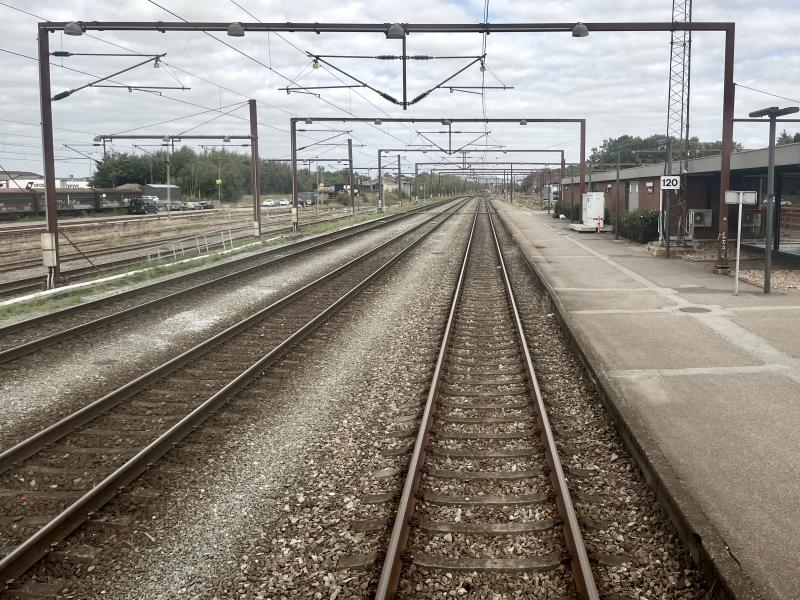
All over Europe, the timetable change this December will bring improvements for railway passengers. But the railway border between Denmark and Germany, already plagued by unreliable service and lack of capacity, will see significantly fewer trains. Because Danish state railway DSB lacks suitable rolling stock, the Intercity service between Fredericia and Flensburg will be replaced by a bus between the border station of Padborg and Flensburg. The bus not only lengthens the travel time by half an hour, it also misses the connection with the German regional express service to Neumünster and Hamburg, effectively destroying this alternative connection to the busy Copenhagen to Hamburg trains.
In an open letter to Danish and German officials, the European Rail Passengers Union – a Europe-wide passenger organisation focused on cross-border rail – criticised the bus replacement. ERPU board member Jon Worth explains, “This is an important rail connection, both for local communities and for international travel, which is why we, as a Europe-wide passenger organisation, are so concerned about this situation.”
With traffic congestion already a problem on this route, because of both Denmark and Germany’s ongoing suspensions of Schengen and implementation of time consuming border controls, it is highly questionable whether a rail replacement bus can operate reliably. Losing this public-transit link will be disruptive to local communities, for whom cross-border mobility is vital and integral. The European Rail Passengers Union also argue that it will negatively impact international travel more broadly, as this connection provides much needed extra capacity and travel options between Scandinavia and the rest of the continent.
While announced to last for one year, ongoing delays with the delivery of new trains likely mean that the bus replacement will continue into the 2030s if no alternative solution can be found. There exist a number of options to maintain the rail service between Flensburg and Padborg, such as making use of existing rolling stock in a new formation, rerouting currently schedule services, or fast-tracking approval of new trains. However, any action would require parties on both sides of the border to sit down and find a solution together.
Jon Worth adds, “From the passenger’s perspective the current situation is unacceptable. We are optimistic that with a little bit of good will a solution can be found that will meet passengers’ needs.”
The full letter can be found below:
❧ ❧ ❧
I am writing on behalf of the European Rail Passengers Union. We represent passengers who depend on reliable and accessible cross-border public transport to connect us to work, family, and commerce, including between Denmark and Germany.
We are deeply disappointed by the announcement that the rail connection between Flensburg and Padborg will be replaced by buses until the end of 2027, which also underestimates the length of the problem. With the delivery of the trains that were slated to take over this service now delayed until at least 2030, passengers will face an unacceptably bad situation on this key link for many years if no action is taken. With traffic congestion already a problem because both Denmark and Germany choose to continue disrespecting the spirit of Schengen, it is highly questionable whether a rail replacement bus can operate reliably. It will harm local communities for whom cross-border mobility is vital and integral. Also, it will negatively impact international travel more broadly, as this connection provides much needed extra capacity and travel options between Scandinavia and the rest of the continent.
As Europeans, our lives do not stop at national borders, which is why we, as a Europe-wide passenger organisation, are so concerned about this situation. We have identified a number of options that would provide the level of service that passengers deserve and that should be taken into consideration.
The first possibility we see is to run “Vectron Sandwiches” of Siemens Vectron locomotives at the front and back of IC1 carriages. This is a formation that DSB has used in the past in cooperation with DB for cross-border services. It would allow the missing links in the timetable to be filled so that passengers can make their transfers to regional trains on both sides of the border.
The second, complementary, possibility is to have every RailJet (RJ) and EuroCity Express (ECE) stop in Flensburg instead of Schleswig, giving passengers more regional and cross-border connections.
Finally, as a third option we see the option to fast-track ICE-T approval to run this route.
There may be other options that adequately address the needs of passengers and communities on both sides of the border. We would be happy to provide input and help evaluate possible scenarios from the perspective of passengers.
Border regions should not be treated as peripheral. Although sometimes less visible to central planners, these cross-border links are vital for communities. We look forward to working with you to find solutions that will best serve all passengers.
Sincerely,
The European Rail Passengers Union.